
The country's largest car maker, Maruti Suzuki India, on Tuesday launched a new version of its small car Estilo with a fuel efficient engine at an introductory price between Rs 3.12 lakh and Rs 3.95 lakh (ex-showroom, Delhi).

Maruti Suzuki India on Thursday posted a marginal increase in consolidated net profit to Rs 3,792 crore for the June quarter, with robust overseas shipments compensating for the drop in domestic sales. The country's largest carmaker reported a net profit of Rs 3,760 crore in the April-June period of the previous fiscal year.

Concerned over sales growth coming mainly from two of its models - Dzire and Swift - country's largest carmaker Maruti Suzuki India said unless its other products contribute equally the company could face problems in the long-term.

According to Siam data, Indian auto companies sold 982,456 units of utility vehicles in the first half of FY23, a 50.29 per cent growth over the corresponding period last year.

Domestic passenger vehicle dispatches in India are estimated to have grown by approximately 21 per cent to 4.60 lakh units in September, with major carmakers like Maruti Suzuki, Tata Motors, M&M, and Hyundai all reporting double-digit growth, driven by increased supplies for the upcoming peak festival season and healthy demand.

Maruti Suzuki India on Wednesday reported a 47 per cent jump in its net profit to Rs 3,650 crore for the April-June quarter on account of cost reduction efforts, favourable commodity prices and foreign exchange gains. The auto major had posted a net profit of Rs 2,485 crore in the April-June quarter of last fiscal.

Auto major Maruti Suzuki India on Friday said its consolidated net profit declined by 1 per cent year-on-year to Rs 3,911 crore in the fourth quarter ended March 31, 2025, on account of higher expenses. The country's largest carmaker reported a net profit of Rs 3,952 crore in the January-March quarter of FY24.

Indian carmakers, including Maruti Suzuki and Kia India, reported robust sales growth in May 2026, with both companies achieving their highest-ever monthly sales despite rising fuel prices. Maruti Suzuki's domestic sales surged to 1,93,535 units, while Kia India recorded 27,586 units, driven by strong demand in mini and compact segments and a shift towards electric and CNG vehicles.
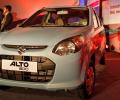
The country's largest automobile maker Maruti Suzuki India (MSI) on Monday said it will hike prices of its cars in the second quarter of the current fiscal due to increase in the input costs. "Over the past year, the cost of the company's vehicles continue to be adversely impacted due to increase in various input costs. "Hence, it has become imperative for the company to pass on some impact of the above additional cost to customers through a price rise," Maruti Suzuki India said in a regulatory filing.

The company's earlier highest for total and domestic sales stood at 1,21,952 units and 1,10,424 units respectively in March 2011.

The country's largest carmaker Maruti Suzuki India (MSI) on Thursday said it has appointed Hisashi Takeuchi as the new managing director and CEO with effect from April 1, 2022. The company's board in its meeting held on Thursday, appointed Takeuchi as the managing director and CEO from April 1, consequent to the completion of the term of Kenichi Ayukawa on March 31, 2022, MSI said in a statement. In order to facilitate a smooth transition, Ayukawa will continue as a whole-time Director designated as Executive Vice Chairman till September 30, 2022, and will continue to provide guidance to the auto major, it added.
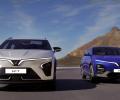
New players like Maruti Suzuki, VinFast, and Tesla are significantly expanding India's electric passenger vehicle (e-PV) market, capturing an 8.1 per cent share and contributing 18 per cent of incremental registrations in the first half of 2026, according to Fada Research data.

The operating performance of the country's largest passenger carmakers, Maruti Suzuki India (MSIL) and Hyundai Motor India (HMIL), in the July-September quarter (Q2) of 2025-26 (FY26) outpaced brokerage expectations.
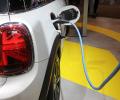
Maruti Suzuki India will launch electric vehicles in the country only after 2025 as demand for such vehicles at the moment is less and it would like to sell around 10,000 units a month whenever it enters the electric mobility space, company chairman RC Bhargava said on Wednesday. Addressing a virtual conference on the company's second quarter earnings, he said under the current circumstances a lot of things in the EV ecosystem such as batteries, charging infrastructure and electric supply are done by other parties and therefore the costing is not in the hands of the company. Also with fuel prices going up, car market leader Maruti Suzuki India is intensifying its focus on more CNG offerings of its models.
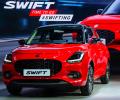
Passenger vehicle sales in India are estimated to have surged by nearly 25 per cent in June 2024, reaching approximately 4 lakh units, with Maruti Suzuki, Tata Motors PV, and Mahindra & Mahindra leading the growth, despite concerns over geopolitical tensions and monsoon impact.
The automobile sector has started seeing volume growth, the crucial economy segment included. Maruti Suzuki India (MSIL) could be a big beneficiary as the country's largest passenger vehicle (PV) maker has seen several favourable developments including volume recovery. Demand for its new sports utility vehicles (SUVs) appears to be good, and the company has 4 lakh outstanding orders by April 2023, (up from 3.6 lakhs in January 2023). Siam (Society of Indian Automobile Manufacturers) estimates that passenger vehicle demand would grow by 5-7 per cent in the 2023-24 financial year (FY24) and MSIL is likely to beat the market growth.

In a filing to the BSE on Monday, Maruti Suzuki India said Suzuki Motor Corporation's stake in MSI has increased to 56.2 per cent from 54.2 per cent due to a share swap agreement with the domestic car market leader to acquire Suzuki Powertrain India Ltd.
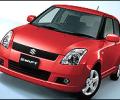
MSI's exports increased by 54.34 per cent to 14,386 units in January, from 9,321 units in the year-ago period.

The 200-DMA is a closely watched indicator of a stock's long-term trend and can serve as an early warning of trouble.

MSI is also looking to produce one million vehicles by the end of this fiscal.

India's entry-level passenger vehicle market is experiencing a significant recovery, with mini car wholesales surging 86.3 per cent year-on-year in the first half of FY27, driven by improved affordability and stronger overall demand.
The company also recorded its highest-ever annual sales in 2008-09 at 792,167 units as against 764,842 units in the previous fiscal, a rise of 3.57 per cent. The previous highest annual sales were in 2007-08. '2008-09 marked Maruti Suzuki's silver jubilee year in India. Over these 25 years, the company sold over 70 lakh cars in the domestic market. Additionally, over 5 lakh cars have been exported the world over,' Maruti Suzuki India said in a statement.

Passenger vehicle sales in India kicked off on a flat note in new fiscal 2024-25 with 3.38 lakh units sold in April, impacted by high base effect and muted demand due to the ongoing general elections. Dispatches of passenger vehicles from manufacturers to dealers were at 338,341 units in April 2024 as compared to 332,468 units in the same month last year, a growth of 1.77 per cent with major players Maruti Suzuki India, Hyundai and Tata Motors reporting marginal growth in their domestic wholesales.

In May, MSI recorded domestic sales at 89,478 units, compared to 93,519 units in the year-ago period, registering a fall of 4.32 per cent.

Maruti Suzuki India's net profit surged 80.3 per cent to Rs 3,716.5 crore in the September quarter, driven by better sales, softening commodity prices, cost reduction efforts and higher non-operating income. The company had delivered a net profit of Rs 2,061.5 crore in the year-ago period, Maruti Suzuki India said in a statement on Friday. Maruti said it is expecting the affordability of small cars in the domestic market to come back in the next 2-3 years in the face of rising income levels of people and a growing economy, among others.

Car market leader Maruti Suzuki India on Thursday said it will hike prices by up to Rs 32,500 across various models from February 1 to partially offset the rise in input costs. Due to rising input costs and operational expenses, the company plans to increase car prices, starting February 1, 2025, Maruti Suzuki India said in a regulatory filing.
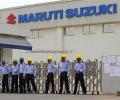
Maruti Suzuki, India's biggest carmaker, reported a 36 per cent rise in third-quarter net profit, matching estimates, as favourable foreign exchange movement and cost reduction efforts offset falling sales.

Maruti Suzuki India will increase the prices of its vehicles 'substantially' from next month as it looks to offset the impact of rising input costs and make provisions to update the model range to conform to stricter emission norms which kick in from April 2023. In a regulatory filing on Friday, the country's largest carmaker said it continues to witness increased cost pressure driven by overall inflation and recent regulatory requirements. While the automaker makes maximum effort to reduce cost and partially offset the increase, it has become imperative to pass on some of the impact through a price increase, it added.

In the domestic market, the car has been well accepted and currently the company has over 80,000 bookings for the model.
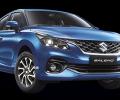
Maruti Suzuki India on Tuesday reported an 18 per cent year-on-year dip in consolidated net profit at Rs 3,102 crore for the second quarter ended September hit by the withdrawal of indexation benefit and change in the tax rate on long term capital gains on debt mutual funds. The country's largest carmaker had posted a net profit of Rs 3,786 crore in the July-September quarter of last fiscal.

Maruti Suzuki India on Monday said the production at its plant in Gurgaon has been impacted due to strike at Suzuki Powertrain India Ltd (SPIL), which supplies engines to MSI.

Indian equity benchmarks Sensex and Nifty experienced a decline in early trade, primarily due to a sell-off in power and metal stocks, mirroring a broader downturn across Asian markets. Elevated crude oil prices and firm US bond yields further dampened investor sentiment, while an expert warned of an impending correction in overvalued mid and small-cap segments. Track Sensex, Nifty on October 22.

The scheme, called 'Suhana Safar', targeted customers who aspire to own a car but were hesitant because of concerns around arranging the down payment or managing future EMI obligations.
Car market leader Maruti Suzuki India's July sales remained almost flat at 58,543 units as against 57,909 units in the same month last year.

The scrip jumped as investors tracked weakness in the Japanese yen which would boost margins of Suzuki's Indian subsidiary by reducing the costs of imports.

In a filing to the BSE, Maruti Suzuki India said HSBC Global Investments Fund Mauritius Ltd had sold 1,99,198 shares in the open market on June 29.
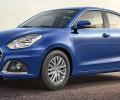
Maruti Suzuki India on Tuesday reported a 28 per cent rise in exports at 263,068 units in 2022, its highest ever overseas shipments. The company's previous highest exports was achieved in 2021 with 205,450 units. The highest exported models in 2022 were Dzire, Swift, S-Presso, Baleno and Brezza, the company said in a statement.

Ahead of this year's Budget, leading car manufacturer Maruti Suzuki on Monday asked the government not to roll back the entire stimulus package at once as it may hamper economic growth.

"Export will not be better in this fiscal. It will remain more or less the same as last year or may be even worse. Situation in many global markets has not improved yet," Maruti Suzuki India (MSI) Chairman R C Bhargava said on the sidelines of Hero Mindmine Summit.

The country's largest carmaker, Maruti Suzuki, on Tuesday said it expects sales to grow around 10 per cent in 2010.
